
An Outlet Stopped Working: What Could Be Causing It?
A dead outlet can involve a tripped GFCI or breaker, a wall switch, a failed device, a loose connection, moisture, or a broader circuit problem.
By 2ndmynd · · Updated
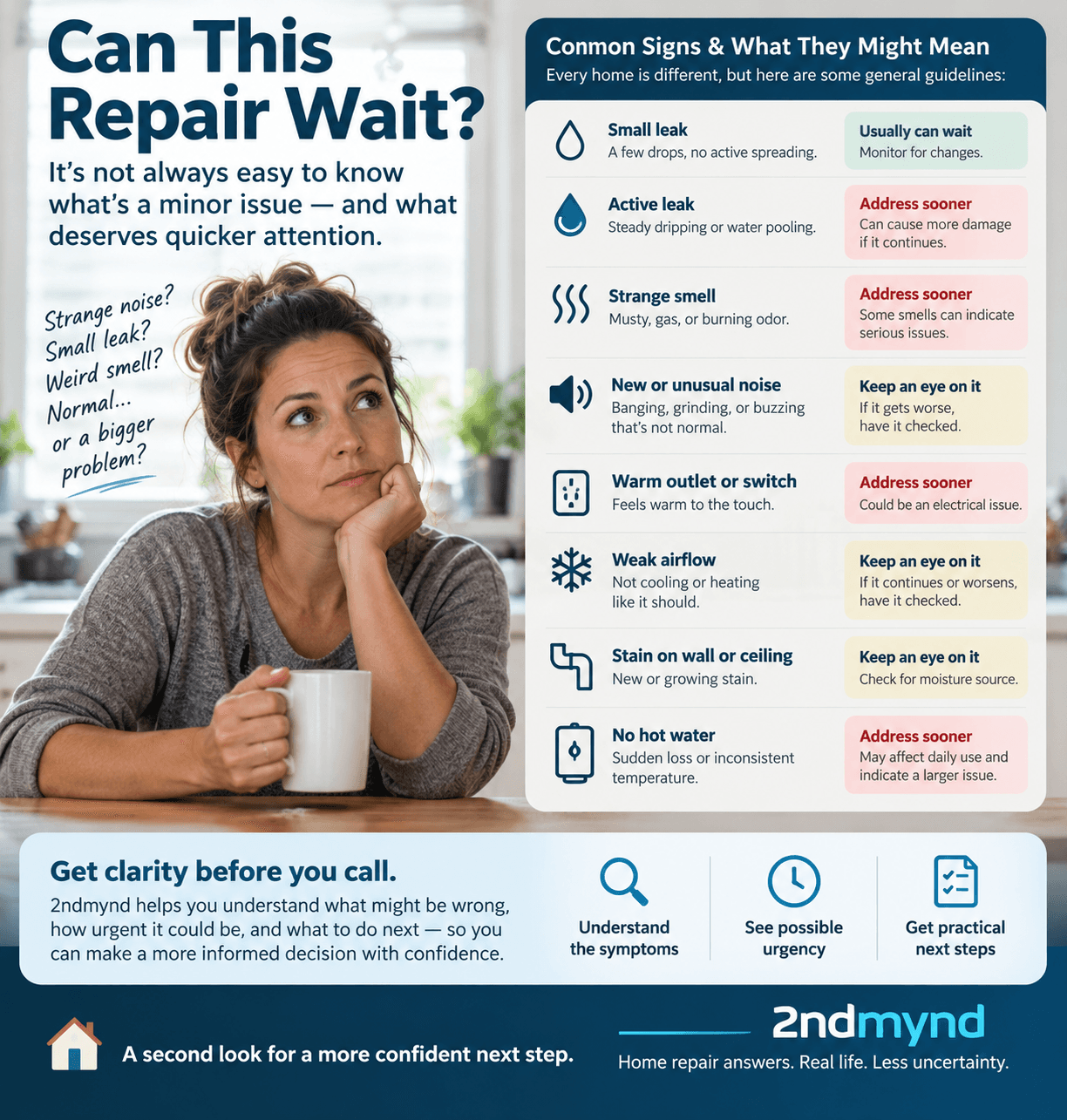
A stopped outlet does not always mean the receptacle itself failed. It may be controlled by a wall switch, protected by a GFCI elsewhere, supplied by a tripped breaker, affected by one appliance, or part of a larger circuit or connection problem. You can safely document the pattern, but an electrician should diagnose anything that is unexplained, recurring, damaged, hot, wet, noisy, discolored, or associated with repeated tripping.
Why would an electrical outlet stop working?
Most often it isn't the outlet itself: a tripped GFCI elsewhere, a breaker that opened, or a wall switch that controls it. Sometimes the device has failed or a connection has loosened. Wall outlets (sometimes called sockets) can also stop working after moisture reaches the circuit.
Use the safety checks below only when there are no warning signs. Call a licensed electrician if the outlet is hot, discolored, buzzing, smells burned, is sparking, or repeatedly loses power. If it is loose or has any of those signs, stop using or resetting it and see the failing-outlet warning signs. Not sure who should handle it? See electrician or handyman.
2ndmynd serves homeowners across the United States. Electrical licensing and permit rules differ by state and locality.
Check for danger before looking for a simple explanation
Stop using the area and seek qualified help promptly if the outlet or nearby switch is hot, discolored, loose, buzzing, sparking, smoking, or smells burned; if you felt a shock or tingle; if wiring is exposed; or if water is near electrical equipment. Move away and contact emergency services or the appropriate utility when there is imminent danger, fire, a downed line, or damaged service equipment.
Do not remove the cover, insert a tester, open a panel, tighten the device, or touch anything wet. Do not keep resetting a GFCI or breaker that trips again. Those actions move beyond observation into energized electrical work.
A wall switch may control the receptacle
Some rooms have a switched receptacle, often with only one half controlled by a wall switch. A moved switch, smart control, timer, or unusual room wiring can make an outlet appear dead. Without opening or probing anything, note whether a nearby switch changes the outlet's behavior and whether only one plug position seems affected.
If the arrangement is new, intermittent, or no longer works as it previously did, an electrician can determine whether the issue is the switch, receptacle, connection, or circuit. Do not assume an unfamiliar switch arrangement explains heat, noise, damage, or repeated faults.
An upstream GFCI may have tripped
A GFCI device can protect outlets located downstream, so the outlet that stopped working may not have its own test and reset buttons. Bathrooms, kitchens, garages, basements, laundry areas, and outdoor locations are common places to notice this relationship, but wiring layouts vary.
If you can see that a GFCI is tripped and the area is completely dry and undamaged, note that fact and follow the manufacturer's normal user control only if you are comfortable doing so. If it will not reset, trips again, or any moisture, heat, damage, odor, buzzing, or shock is present, stop and call an electrician. Do not search by opening covers or cycle multiple devices repeatedly.
A breaker or protective device may have opened
Several dead outlets or lights on the same area of the home can point to a branch-circuit interruption. A breaker may respond to an overload, appliance problem, ground fault, short-circuit condition, or another fault. An AFCI or GFCI breaker can also open for protection-related reasons.
A visibly tripped breaker is an observation, not a diagnosis. If it has already been reset and trips again, or if the trip is immediate or tied to water, heat, odor, sound, or a specific high-load appliance, stop using the affected circuit and call an electrician. Do not remove a panel cover or repeatedly reset the breaker.
The connected appliance may be the problem
Sometimes one lamp, charger, appliance, power strip, or cord has failed while the outlet remains functional. Note whether only one item is affected and whether that item also fails at another known-working location, but do not move burned, wet, damaged, sparking, unusually hot, or heavy hardwired equipment for testing.
If one large appliance or HVAC unit repeatedly causes a trip, both an equipment specialist and an electrician may be relevant. The appliance can have an internal fault, or the circuit and protective device can require evaluation. Avoid deciding which one is responsible without professional testing.
The receptacle or switch may have failed
Devices wear, loosen, or become damaged. One isolated dead receptacle, a plug that no longer fits securely, intermittent operation, or a switch that behaves inconsistently may focus attention on the device. But the same symptoms can come from a connection or upstream circuit.
A quoted receptacle replacement does not by itself prove that the receptacle is the cause. Ask what test supports device replacement and whether the electrician will inspect the related connections and protection. Heat, discoloration, buzzing, sparking, or looseness increases urgency and should not be treated as a simple do-it-yourself swap.
A loose or failing connection is possible
A connection can fail at the affected device or elsewhere on the circuit. Intermittent power, flicker, heat, noise, or several downstream devices failing can be consistent with a connection problem, but these observations cannot locate it remotely. An electrician needs to test and inspect the circuit safely.
Connection problems can present fire or shock risk. Do not manipulate the outlet to see whether power returns, and do not continue using a device that behaves differently when touched or moved.
Moisture may have affected the circuit
Outdoor receptacles and outlets near plumbing, kitchens, bathrooms, garages, or basements can be affected by moisture, weather, leaks, or damaged covers. A GFCI may trip in response, or the device and connections may need evaluation.
Keep away from wet electrical equipment. Address the water source with the appropriate professional only after electrical safety is considered. A plumber, roofer, HVAC technician, or restoration company may be needed for the source, but an electrician should assess affected electrical components.
Several outlets or part of the home may be out
Map the extent from a safe distance: one outlet, several outlets in one area, one room, several unrelated rooms, or the entire home. Also note whether lights became unusually dim or bright, a storm or outage occurred, neighbors are affected, or only your property failed to recover when utility service returned.
Whole-home, partial-home, unusual brightness, storm damage, a downed line, or visible damage at the meter or service connection is not a simple outlet problem. Check utility outage information and contact the serving utility and a licensed electrician as appropriate. Do not approach exterior service equipment or storm-damaged lines.
Useful information for the electrician
Prepare a short description:
- Exact location and number of affected outlets, switches, and lights.
- Whether the problem is constant or intermittent.
- Whether a wall switch changes anything.
- Whether a GFCI or breaker was already visibly found tripped.
- Whether the problem follows use of one appliance.
- Any recent storm, leak, outage, remodel, or electrical work.
- Any heat, odor, discoloration, noise, spark, shock, water, or damage.
Wide photos from a safe distance can show device location and visible damage. Do not take close-up photos if doing so requires touching equipment, standing in water, or entering an unsafe area.
What the repair might involve
After testing, professional repair paths can include restoring or replacing a GFCI or receptacle, repairing a switch, correcting a connection, resolving a branch-circuit fault, addressing moisture damage, replacing a protective device when justified, or coordinating with an appliance, HVAC, utility, or water-source professional. The symptom does not reveal which path is correct.
Ask the electrician to separate diagnostic work, device replacement, circuit repair, breaker or panel scope, access, permit work, emergency charges, and restoration. A small device quote and a larger circuit or panel quote are not comparable unless they address the same confirmed finding.
Electrician or handyman?
A licensed electrician is the default for diagnosing or changing an electrical device, circuit, breaker, panel, or hardwired fixture. A handyman may handle separate cosmetic work, such as patching after an electrical repair, and local rules may permit limited tasks in some jurisdictions. Confirm the exact rule rather than assuming a small visible device is exempt.
Read the electrician-or-handyman guide for more provider context, then use the estimate comparison checklist if you receive different diagnoses or proposed scopes.
Frequently asked questions
Is a dead outlet dangerous?
It can be a simple interruption, but it can also involve a damaged device, loose connection, moisture, or circuit fault. Heat, burning odor, discoloration, buzzing, sparking, shock, water, or repeated trips require prompt professional help.
Why would a GFCI in another room affect this outlet?
One GFCI can protect other receptacles downstream on the same circuit. An electrician can trace the relationship if the visible controls do not restore power or if the device trips again.
Should I keep resetting a breaker that trips?
No. A breaker that trips again may be responding to an overload, appliance problem, ground fault, short-circuit condition, or other fault. Stop using the affected circuit and have an electrician evaluate it.