
Electrician or Handyman? How to Know Who Should Handle an Electrical Problem
Use a conservative decision guide for dead outlets, GFCIs, switches, fixtures, breaker trips, power loss, and electrical warning signs.
By 2ndmynd · · Updated
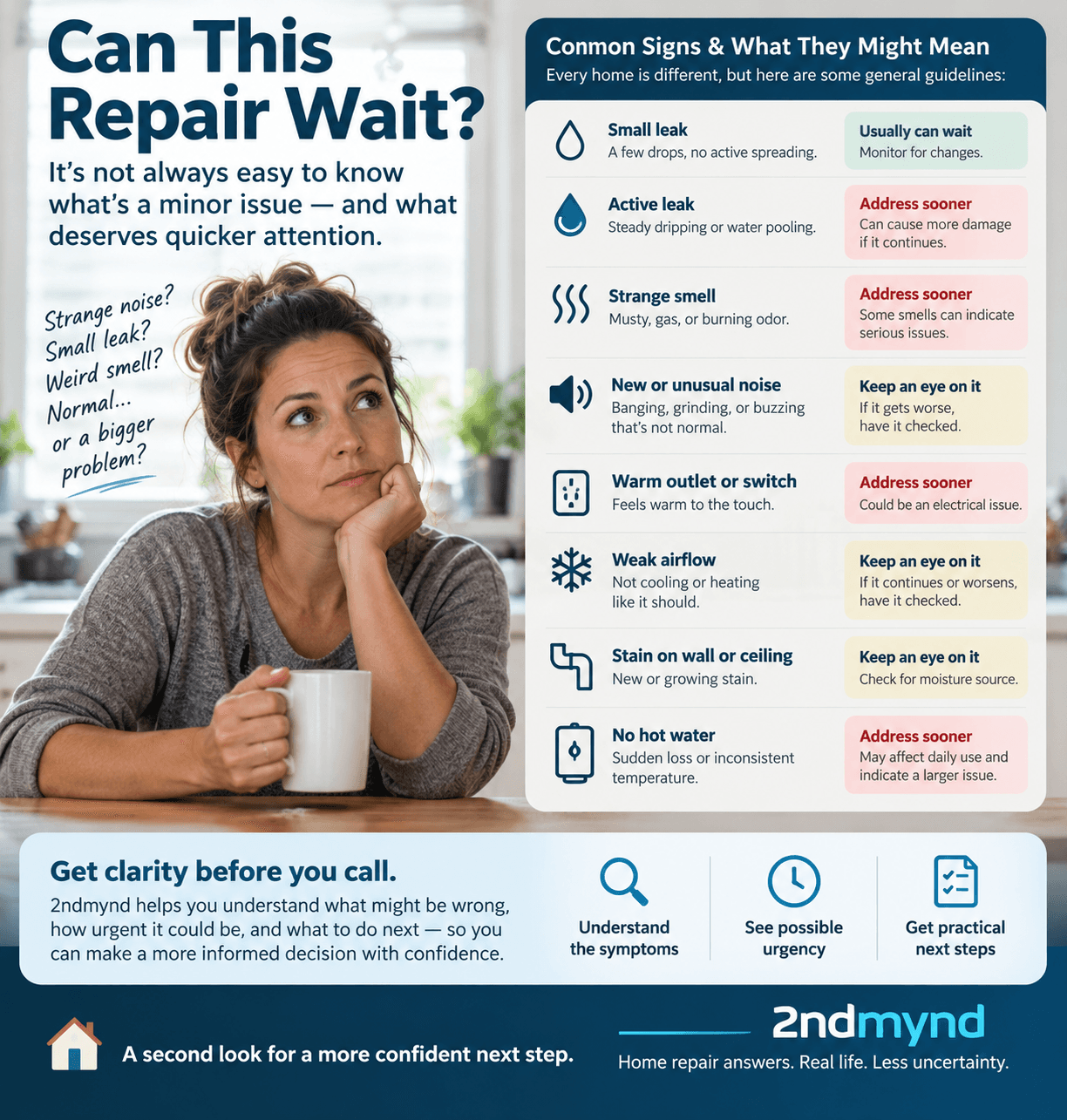
For a true electrical problem, a licensed electrician is the safest default. A handyman may be appropriate for non-electrical work around a fixture, and some jurisdictions allow narrowly defined replacements, but local licensing rules vary. If the task involves wiring, a circuit, a breaker, a panel, repeated faults, heat, arcing, burning odor, or uncertain scope, call an electrician.
Can a handyman do electrical work?
Only in limited situations, and only where local rules allow it. Work involving wiring, circuits, breakers, panels, an unexplained dead outlet, heat, a burning smell, or sparking should be handled by a licensed electrician. Licensing and permit rules differ by state and locality, so confirm what a provider is allowed to do before any electrical work starts.
If only one outlet has stopped working, why an outlet stopped working covers what to note before you call.
Why the boundary should be conservative
An outlet that looks dead may be affected by an upstream GFCI, a breaker, a failed device, a loose connection, moisture, or a broader circuit problem. A light fixture problem can come from the bulb or fixture, the switch, the wiring, or the circuit supplying it. The visible device is not always the failed part. Electrical diagnosis requires safe testing and an understanding of how protective devices and circuits interact.
The question is not whether a handyman has changed an outlet before. It is whether the provider is legally authorized, properly qualified, and equipped to diagnose the exact scope in your location. Electrical licensing and permit rules differ by state and locality. When the scope is uncertain, choose the licensed electrical route.
Call an electrician immediately for warning signs
Move away from the area and seek qualified help promptly if you notice smoke, fire, sparking, arcing, a burning odor, a hot or discolored outlet or switch, buzzing from electrical equipment, shock or tingling, exposed wiring, or water contacting electrical equipment. Contact emergency services or the appropriate utility when there is imminent danger, a downed line, or damaged service equipment.
Do not remove a cover, open a panel, insert a tester, touch a wet device, or repeatedly reset a breaker or GFCI. A protective device that trips again is reporting a condition that needs investigation; defeating or repeatedly cycling it can increase risk.
Common electrical symptoms and who usually handles them
One dead outlet
A single outlet may have lost power because of an upstream GFCI, a switched receptacle, a failed device, an appliance problem, or a connection issue. If there are no warning signs, you can safely note which outlets and lights are affected, whether a wall switch changes anything, and whether a GFCI or breaker was already observed as tripped. Do not open the outlet or panel. If normal visible controls do not explain it, call an electrician.
GFCI will not reset or trips again
A GFCI may protect other outlets downstream, so the affected device may be elsewhere from the button you see. Moisture, a connected appliance, a circuit fault, a failed GFCI, or another condition may be involved. If the device will not reset or trips again, stop using the affected area and call an electrician. Avoid reset loops and do not plug or unplug equipment in a wet or burned area.
Switch replacement
A broken cover plate or other purely cosmetic, non-electrical task may fit a handyman. Replacing a switch or diagnosing a switch that works intermittently involves electrical conductors and may require a licensed electrician under local rules. Heat, crackling, looseness, discoloration, or inconsistent operation makes the electrician route especially important.
Light fixture issue
If a known-good bulb does not solve the problem, the cause may be the fixture, switch, connection, breaker, control, or circuit. Installing or replacing a hardwired fixture is regulated differently across jurisdictions. Confirm whether the provider is permitted to perform that exact work. Use an electrician for high, heavy, damp-location, damaged, recurring, or diagnostically uncertain fixture problems.
Breaker trips
A breaker may trip because of load conditions, an appliance or HVAC problem, a ground or short-circuit condition, a connection problem, or equipment within the panel. The breaker itself is not automatically the failed part. Repeated trips, immediate trips, trips associated with water, or any heat, noise, odor, or arcing need an electrician. Panel and breaker work is not handyman scope.
Part of the home loses power
First distinguish one device, one known circuit, several unrelated rooms, and the whole home. If neighbors are also out, check the serving utility's outage information. If only your home is affected, if lights became unusually dim or bright, or if service equipment appears damaged from a safe distance, contact the utility and a licensed electrician as appropriate. Do not approach a downed line, meter, service mast, or storm-damaged equipment.
Panel or service equipment
Use a licensed electrician for panels, main breakers, service equipment, grounding or bonding, service upgrades, or a recommendation to replace a panel. These scopes may also involve the utility, permits, and inspections. A large replacement recommendation is not automatically unreasonable, but it should be supported by documented findings and a scope that distinguishes a localized circuit repair from a full service change.
When could a handyman be reasonable?
A handyman may be useful for work that does not alter or diagnose the electrical system: patching drywall after electrical work, mounting a battery-powered device, replacing a non-electrical decorative part, or other clearly separate finish work. Some locations may allow limited like-for-like electrical tasks under specific conditions, while others require a licensed electrician. Never assume the rule is the same across states, cities, or project sizes.
Before hiring, describe the exact task and ask:
- Does this work require an electrical license or permit here?
- Who will perform the work, and what license covers that person or company?
- Does the quote include diagnosis, the repair, materials, testing, and permit work?
- What finding supports replacing the device, circuit component, breaker, or panel?
- What is excluded if the initial diagnosis changes after testing?
Give the electrician useful observations
You can improve the first visit without touching energized equipment. Record how many devices are affected, their locations, whether the problem is constant or intermittent, whether it follows use of a particular appliance, and whether a storm, leak, outage, or recent repair came first. Note any breaker or GFCI that was already visibly found tripped, but do not keep resetting it. Share wide photos only from a safe distance.
These details help separate a device-level problem from an upstream GFCI, branch circuit, appliance, panel, or utility issue. They also make an estimate easier to evaluate because the proposed scope can be tied to the symptom that prompted the visit.
Review the estimate by scope
Electrical estimates can vary because one contractor prices a device replacement while another includes troubleshooting, circuit repair, access, permit work, or panel scope. Compare the diagnostic assumption and exclusions before comparing totals. Ask which tests or observations support the proposed repair and whether a less extensive repair was considered. Do not interpret a higher total by itself as dishonesty; the two proposals may be solving different problems.
For more symptom context, read what can cause an outlet to stop working. If you have competing proposals, use the estimate comparison guide to align diagnosis, materials, permits, warranty, and exclusions.
What usually changes the price of an electrical repair
2ndmynd serves homeowners across the United States. Electrical licensing, permit rules, and labor rates differ by state and locality (how much the answer changes from state to state), but the same factors tend to separate a small electrical bill from a large one:
- Diagnosis time -- an intermittent problem, or a dead outlet with an unknown upstream cause, takes longer to trace than a known failed device.
- Device, circuit, or panel -- replacing one device, repairing a circuit, and replacing breakers or a panel are very different scopes.
- Access -- wiring behind finished walls, in an attic, or in a crawlspace adds labor and sometimes patching.
- Permits and inspection -- where required, they add fees and scheduling time.
- Conditions found on site -- damaged connections or deteriorated wiring discovered during the repair can expand the job.
If a single outlet is dead and nothing looks hot or burned, why an outlet stopped working covers what to note before you call. For a hot, loose, buzzing, scorched, or sparking outlet, stop using it and see the failing-outlet warning signs.
Work worth asking about before you approve it
A larger electrical recommendation can be correct, and a real safety finding deserves to be taken seriously. Still, ask what test or observation supports the scope when a quote proposes:
- Replacing a panel to fix a single dead outlet or one tripping circuit.
- Rewiring a room or the whole home based on one symptom.
- Replacing several devices when only one location has a problem.
Then line proposals up with how to compare two home repair estimates. If the problem may not be electrical at all, start with who to call for a home repair.
Frequently asked questions
Can a handyman replace an outlet or switch?
Rules vary by jurisdiction, but outlet and switch replacement involves electrical conductors and often requires a licensed electrician. Confirm the exact local requirement rather than assuming a small task is exempt.
Is a dead outlet dangerous?
It can be a simple interruption, but it can also involve a failed device, loose connection, moisture, or circuit fault. Stop using the area and seek prompt help if there is heat, burning odor, discoloration, buzzing, sparking, shock, water, or repeated tripping.
Who should inspect a breaker that keeps tripping?
A licensed electrician should evaluate repeated or immediate breaker trips. An appliance or HVAC specialist may also be involved when one specific unit triggers the problem, but electrical safety and circuit conditions still need proper assessment.